
AV Brew: Dune|Part 2 Spoiler Free
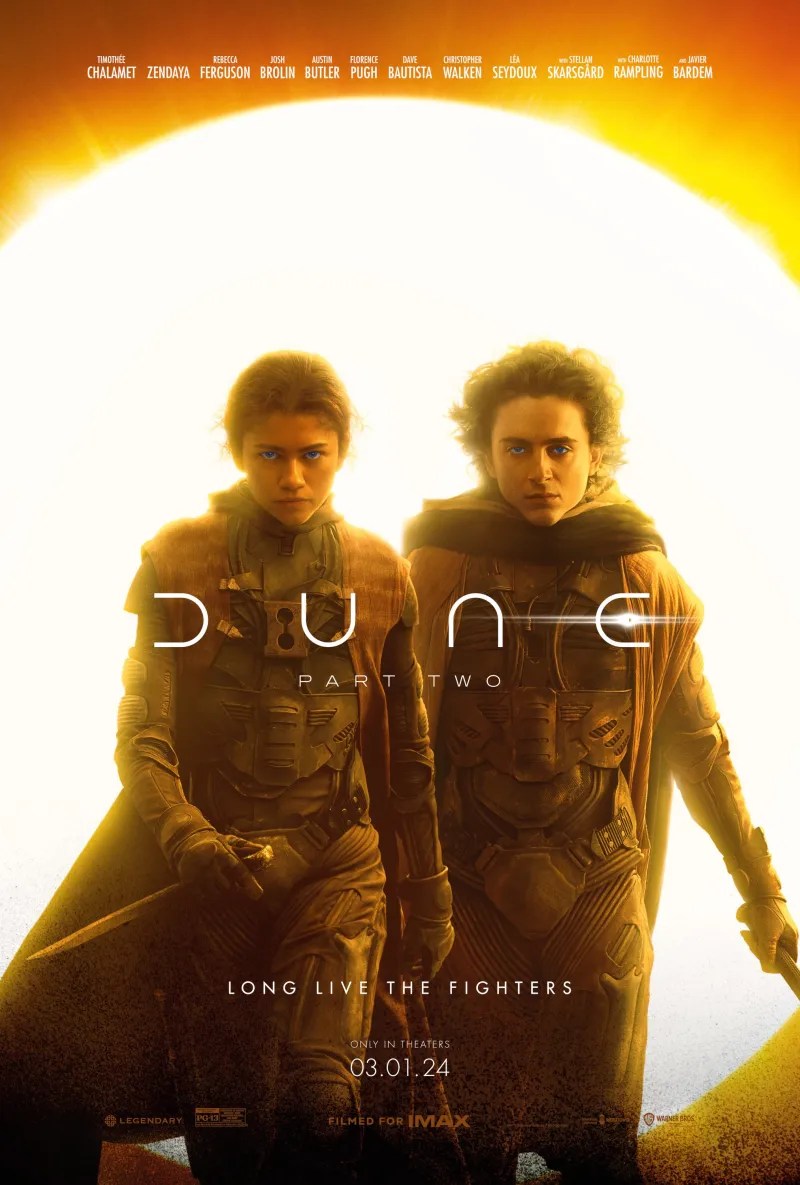
Belle: Hey, everyone! It’s Dune|Part 2 time!
Armand: You mean, stabby, stabby time? Love, and blood, was definitely in the air.
Belle: I love that in the podcast you called it. You said that this movie was going to be ‘Zendaya kills’ and you were right. There’s no way to talk about this movie without talking about Dune 1984 and Dune Part 1 so let’s just get into it.
Armand: There were a lot of interesting changes that were made that, in some ways, combined all the previous filmed and unfilmed versions while staying true to the book. The first I can think of is Paul’s visions. Villeneuve really emphasized, more than Dune 1984 or the Mini-Series, that Paul’s visions aren’t always accurate and are more possibilities. There are scenes that we’ve seen in the trailers and in Part 1 that don’t happen, or that happen in a way that is so far from what we thought they would be. It’s way more terrifying because of that and because, unlike in previous adaptations, not only is Paul seeing these visions but he’s dwelling in and experiencing them. He’s feeling those moments we see in Part 1 where Chani stabs him, he’s feeling the battles, he’s feeling what we see in this film and when you stop and think about it, that’s horrifying.
Belle: It’s worse when you realize he’s experiencing these realities all at once.
Armand: It makes him even more of a tragic character. The film also does a great job of showing how Jessica is far more comfortable with a much harsher future than Paul is. Paul, for all his rightful need for vengeance is still Leto’s son and Leto was a man of peace. Jessica, and the Bene Gesserit as a whole, are about power and those are very different things. Watching Paul realize that and just how dangerous his mother is was one of my favorite things of the film.
Belle: The irony is the Bene Gesserit spent literal eons plotting to create and control the Kwisatz Haderach and because of Jessica’s Crime not only do they not control him, he actively loathes them.
Armand: Yet, Paul is trapped by his visions and the paths they present. He’s trying to navigate it as best he can but there is no good path because of the choices that others, especially the Bene Gesserit, made long before he was born.
Belle: Speaking of choices, let’s speak on some of the changes from the book to the film with regards to characters. One of my favorite things from Part 1 was how Liet-Kynes goes out. In the books Kynes leaves us in one of the worst ways, abandoned in the desert to die with no stillsuit, weapons or food. Whereas in Part 1 she not only goes out like a boss but takes a bunch of Sardaukar with her. However, that choice also allowed for something beyond giving Kynes a better death. It gives, organically, Chani the ability to have the same realizations that Kynes does prior to their death: that Paul really is the Kwisatz Haderach and what that looks like in reality.
Armand: Yes! The film does a wonderful job of fleshing out all the characters but specifically Stilgar and Chani. They give Stilgar way more to do and I think it was absolutely brilliant how they expanded his character in a way that makes total sense while also showing the differences in how he and Chani approach how to save Dune and Paul being the Kwisatz Haderach. Let’s be honest, Timothée Chalamet is absolutely phenomenal in this film but this movie is Zendaya’s film.
Belle: Oh, absolutely!
Armand: Chani is the straw that stirs the drink. Every character is filtered through the lens of how they interact with Chani. It’s interesting, you’re looking at a property that was first introduced in 1965, at a time when most female characters did not have a lot of agency. Now, granted with each subsequent novel Herbert gives his ladies far more to do but in the first novel Chani is there to be Paul’s woman. The choice to actually take the character to where she should go naturally based on the society she lives in, which is very Spartan like, is both wildly radical and completely logical. This is a warrior woman, in a warrior culture and she is not about this mystical nonsense. All she wants is to save her people and get these colonizers off her planet.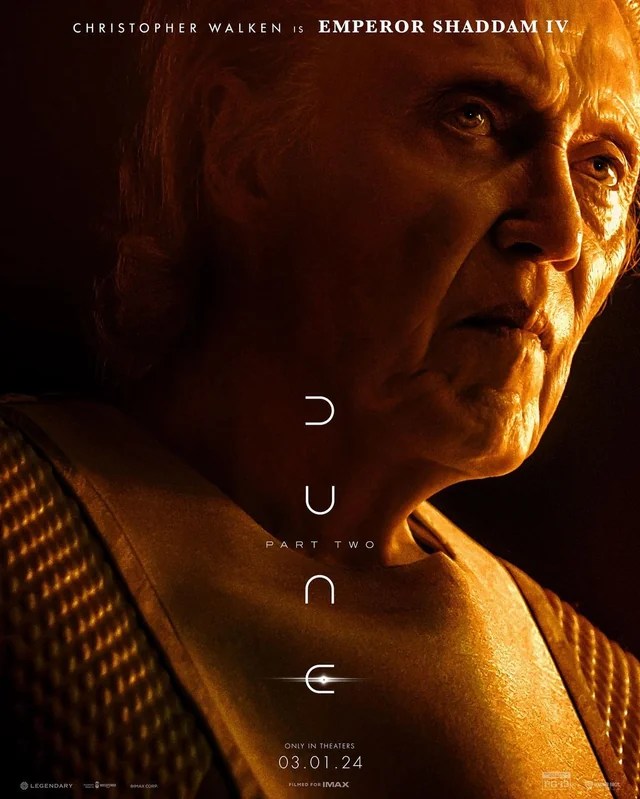
Belle: How do you feel about the new additions?
Armand: I loved all of them, though I think Christopher Walken could have been used better. Charlotte Rampling isn’t a new addition but she had far more to do in this film and we really got a chance to see the Bene Gesserit at work.
Belle: Yes, specifically with Léa Soydoux and Florence Pugh. I’m going to be honest, after the last few Bond films I didn’t think Léa Soydoux could act. She was so flat and boring but she has a whole 15 minutes of screen time in this and she pulls your eye in every scene, she has so much presence. As for Florence Pugh, she was fantastic as always and I loved how you could see Irulan being torn in several directions: she’s the heir to the throne, she’s a Bene Gesserit and she’s a daughter and can empathize with Paul and knows she would do the same in his place.
Armand: I really liked the relationship between Feyd-Rautha and Paul in this. In the 1984 version Paul is dreaming of him but they don’t really interact until the end. Here we get far more of them circuling each other before their confrontation. You can see why the Bene Gesserit’s were so pissed at Jessica as Paul and Feyd really are opposites. It’s why they wanted to marry off an Atreides daughter as a tempering force to a Harkonnen son: while they’re both passionate they have very different personalities. Paul was supposed to be Paulette but Jessica actually fell in love with Leto and now here we are. Austin Butler’s performance is electric and he and Chalamet are fire onscreen together.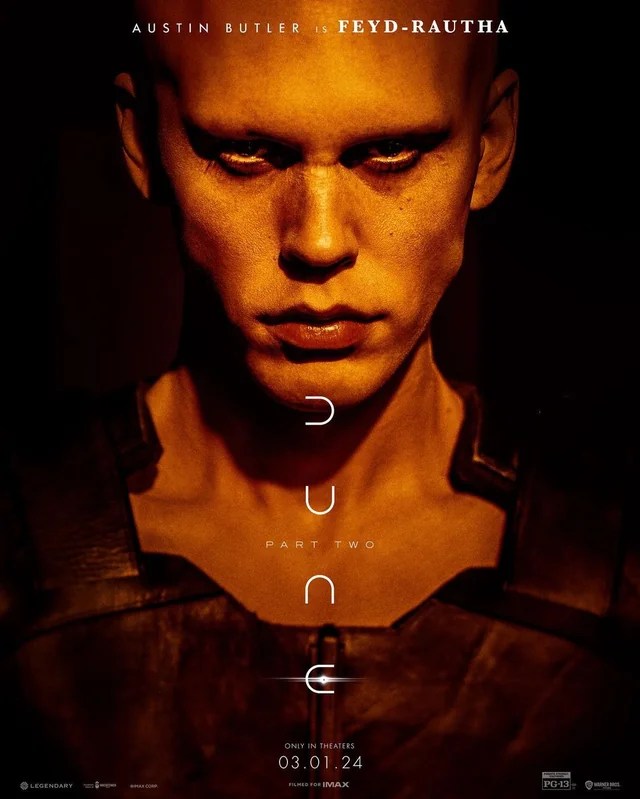
Belle: Let’s talk about sets and costuming. I like how they made each House’s asthetic distinctive. Whether we’re on Geidi Prime or Dune, everything about the Harkonnens is extreme and grotesque. Is it functional? Yes, is it something that just looking at it gives you the ick? Also, yes.
Armand: Well, it ephasized even more the differences between them and the Atreides, right? Even though House Harkonnen and House Atreides are cousins, the Atreides are aristrocrats. Paulus Atreides died fighting a bull. So, the Atreides vs Harkonnens is cultured and refined vs brutish and uncouth. The costuming reflects that.
Belle: They did a great job of showing how different the three great houses not only looked but how they operated. I also liked how House Atreides asthetic is a little in between House Corrino and House Harkonnen, which subtly showed that all of these people are related and this is a family squabble on a galactic scale.
Armand: Anything you didn’t like?
Belle: Thufir Hawat wasn’t in the film. His character is so important to why things pop off. While he’s used far better in Part 1 than he was in 1984, him not being in this was a huge misstep.
Armand: Agreed. Especially because the actor is still alive. There are things that happen specifically in the second half of the film that, without Thufir there, don’t flow quite as well as the should. However, overall this may be one of my favorite films of the last few years. It’s up there with The Creator for me.
Belle: Same. It’s just an absolutely loving and faithful adaptation that understands the themes of Frank Herbert’s works without being slavish to them. I cannot wait for Dune Messiah.
Belle and Armand’s final verdict: 5 Waters of Life out of 5
Thank you to Allied, Legendary Pictures Warner Brothers for the Advanced Screening

 Pop Culture Uncovered
You must be logged in to post a comment.