
PCU Interview: Jason “crybringer” Robinson
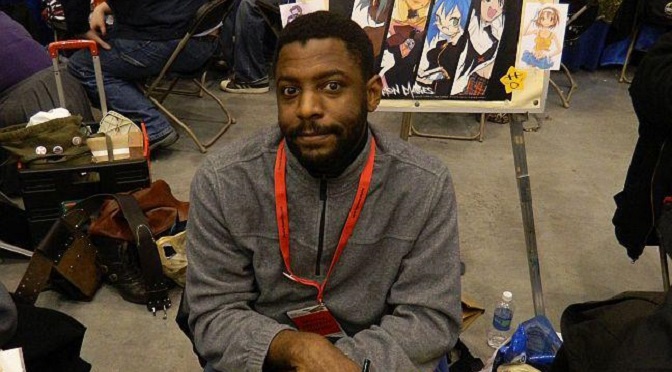
Jason Robinson, aka “crybringer,” has worked in the comic, animation, and video game industries since 2008. In addition to contributing artwork and music for video games, he has written, illustrated, and published his own comic, “The Demon Mages.” Mr. Robinson has also headlined convention panels, lectures, and instruction seminars. Despite his busy schedule, he agreed to talk about his experience, works, and future plans.
PCU: Although you’ve only officially worked in this industry for less than a decade, you’ve been on the scene for almost 20 years. Where exactly did you get your start?
JR: Katsucon 1998 was the changing point for everything. That was when I had my first artist alley table, the first time I displayed my artwork, the first time I had ever done commission work. I drew images in marker, and in pencil, for about $10–15. Since then, it had just been a yearly staple to go to Katsucon, every year for about 10 years onward. I didn’t stop going to Katsucon until about 2007–2008. Even then, that was in concert with going to Otakon, although I wasn’t any sort of artist or regular there until shortly after Katsucon, in 1999.
Since that point, you’ve been a regular artist at many conventions. What were some of your most well-known or favorite ones?
The aforementioned Katsucon 1998. Most of the people I keep regular contact with, most every artist and friendship I’ve made, has been started from that show exclusively.
Otakon 1999, the first time they were at the Baltimore Convention Center, that was when I think Otakon became known for what it’s known as of today. I can say that was when I shared table space with industry professionals, and was on a one-on-one basis with them, most notably, Adam Warren, known for Dirty Pair, Gen¹³, and Empowered. I’m on a first-name basis with him mainly from that show.
I’ve also been at Anime Boston, Anime USA, a regular at New York Comic Con, and most recently Awesome Con and AnimeExpo. Also, my professional career was built off of my first trip to San Diego Comic-Con in 2008, which I remember fondly.
Most of your experience was on the convention scene, but how did you start as an artist? Were you self-taught or professionally educated?
I’ve been an art student since high school. I graduated from Chopticon High School in visual arts and attended the College of Southern Maryland in their visual arts program. That’s actually where I think my true art education started, because I had one of my best instructors there at CSM. I attended University of Maryland Baltimore County for five years, where their curriculum changed at least three times to accommodate the digital arts, and that’s where I got my digital arts education. Everything else, as far as my work stylistically and everything that I’ve done professionally, has largely been learned on the field and on the fly.
Speaking of your work, you have quite a list of contributions to video games, from artwork to music. Could you fill us in on everything?
I feel like I’ve only scratched the surface, even with what I’ve done, but I can certainly list my contract work with Lab Zero Games on Skullgirls. My professional start was actually doing a video game soundtrack with a small development team that worked with Majesco. Since then I’ve done a variety of promotional artworks and some design in mechanical work for other small game companies, like WayForward.
Skullgirls became a breakout indie hit, especially as a fighting game. What were your favorite parts of that job?
Learning how the whole process worked was the most fun, because you don’t get a chance to really see how it all comes together. And even if you think you know, you don’t actually know. So, for me even doing a lot of the pre-production was an eye-opening experience, seeing how collaborative the process can be and then seeing how it applies in the final product.
Do you like fighting games? Or do you prefer a different genre?
I am known for being a fan of side-scrolling shooting games or “shmups” [shoot ’em ups]. I don’t hide that, and it tends to show up a lot in my own personal work. My absolute favorite game is the Gradius series. But I do enjoy fighting games and I am also a big fan of puzzle games as well.
We mentioned your contribution of music. What type of music did you work on?
I did two soundtracks, but only one actually made it to print in the game Toon-Doku for the Nintendo DS. They were pretty standard game soundtracks, kind of just an electronic fusion sort of style; but that was actually where I was challenging myself to try to come up with something unique, trying to make each track memorable. And while I don’t feel this way, the contractor who asked me for the work still cites it as some of his favorites… so I will take that.
Although we’ve mostly focused on your contract work, you also have your own comic, The Demon Mages. Can you fill our audience in on what your series is about?
It’s my first attempt at a fantasy story, which ended up being a sci-fi fusion. It’s a dieselpunk sort of story of how four girls, on the worst night of their lives, turn into the most infamous names in the country: the “Demon Mages.” It takes place in the year 2423, in the Magician’s Nation of Koltenia, where not just humans but fae and demi-humans and various types of mythological beings coexist. And in this time of relative peace, the appearance of The Demon Mages sets off events that haven’t been seen in decades.
Where did the inspiration for your world and characters come from?
I describe it as Dungeons & Dragons in the 1930s and 40s, and in fact it pulls from, and is inspired a lot by, Planescape, Giant Robo and video games like the SaGa series. A lot of the architecture, fashion, and culture from the 30s does influence me as an artist, but for the magical elements in that I was inspired by a lot more modern things that might even happen today. So there’s an interesting mix of both classic fashion and ideas with high technology that’s born out of this sort of magic system.
Who seem to be your biggest fans? Comic lovers? Anime lovers? Any specific age group?
Definitely anime fans gravitate towards it first, and definitely folks in and around their twenties and thirties. A lot more people seem to point how much more “old school” it seems instead of a lot more “modern” anime styles and tropes that you see. It does have a pretty good international fan base. I have a lot more fans in South America, Europe, and Asia than I thought I did.
Speaking of fans, you also have a following among art education; you’ve even been called in to speak at local schools! What advice do you have for upcoming artists trying to break onto the scene?
I actually have a seminar that I’m going to be speaking at in a few weeks, and I think I’m going to rely on what I always say at the end of those seminars, which is, “The one thing to remember is that your story and your journey as an artist is yours to make as you see fit. You’ll take it as far as you can and only you can decide when to stop.”
Given that, where are you headed now on your journey?
This journey is going a lot faster than expected and in a good way. I will be going to NYCC very shortly, but from there I will be expanding on my work with The Demon Mages, releasing new issues, and putting new material online as well. My contract work with Lab Zero will continue, actually a lot sooner than expected. And I look forward to 2017, and a lot of good opportunities in San Diego, New York, and Los Angeles (as well as here at home).
Thank you so much for sparing some free time with us and giving us insight into your work and experience!
Gladly! I am always happy to answer any question and people can always reach me online. I love questions!
For more information on Jason Robinson and his body of work, check out http://crybringer.tumblr.com/ and https://twitter.com/crybringer. His first two issues of The Demon Mages can be purchased online at IndyPlanet. Mr. Robinson’s next event will be New York Comic Con, Oct. 6-9, at the Angry Viking Press table (Booth 2242).

 Pop Culture Uncovered