Why I’m (Mostly) Giving Up on Superhero Comics, And Why That’s OK
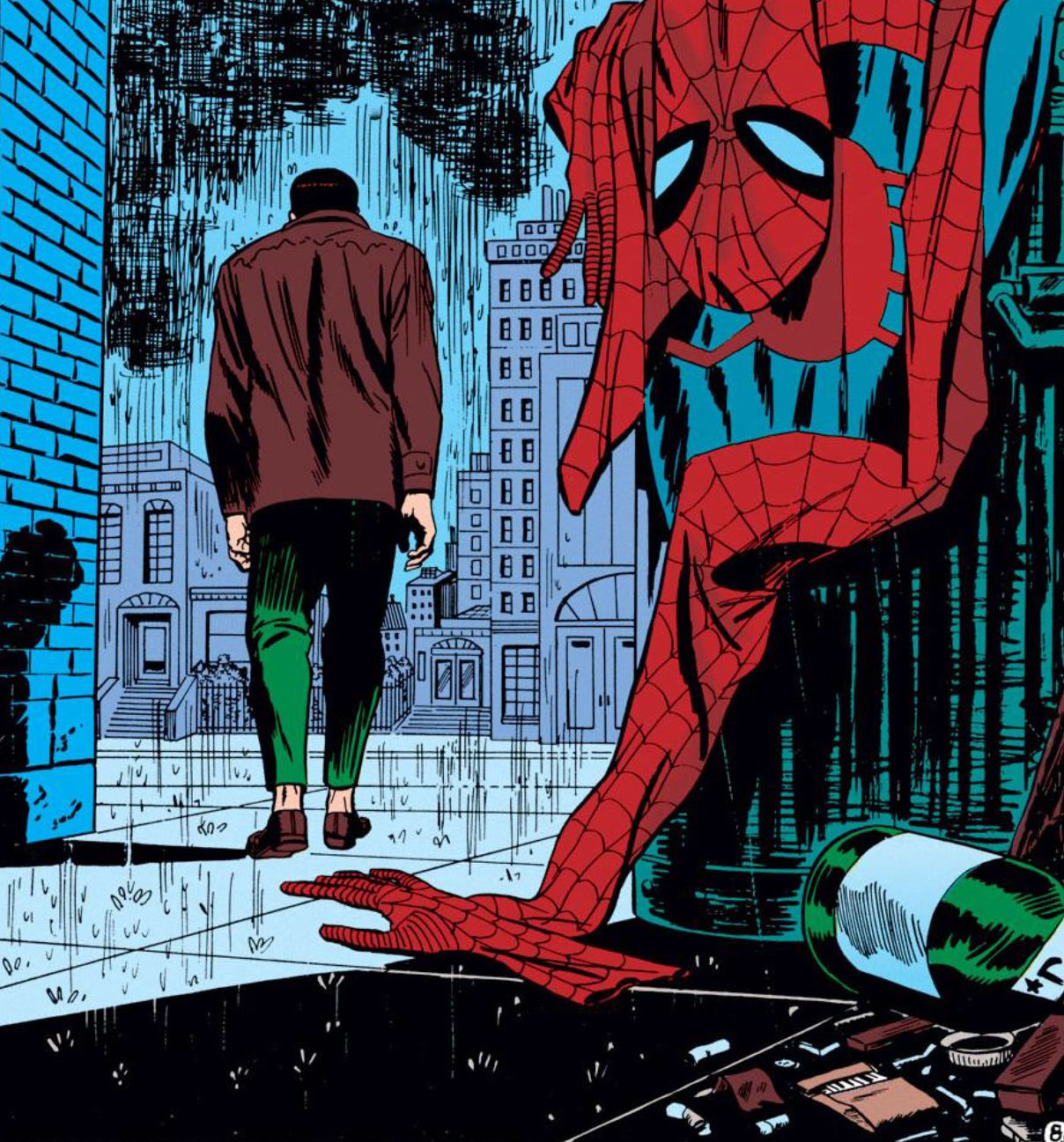
I’m quitting superhero books. Eventually. Mostly.
Let’s break for a second before I continue. This article isn’t aimed at you or at readership in general. Don’t read this article and call me a whiner or accuse me of calling for readers everywhere to wholesale abandon the comics industry. Because I’m not. This is a personally reflective essay, and the comics industry can do what they want with it and decide if there’s more people out there like me and whether they can do anything to get me back. But it’s doubtful, because I’m heading towards “done.” Mostly.
There’s two things that precipitated this. One was my reading of Grant Morrison’s Multiversity, which, mind you, is possibly one of the greatest statements on superhero books qua superhero books, and also one of those books I’ll probably always pull off the shelf when I need a quick read. I hope I’m not getting Morrison’s message wrong, but one of the central theses of the story seemed to be that superhero comics are cyclical by nature. The final issue seems to encapsulate this, as multiversal heroes fight crisis after crisis after crisis. Heroes die, come back as zombies, fight other zombies, are defeated, and they get ready for the next fight.
The Multiversity is either a very cynical work or a very positive one, depending on your point of view. On the positive side, it stands for the proposition that superheroes are these amazing people born of our very best ideals, always standing at the ready to fight the darkness in the world that always seems to be coming for us. That’s a very important message given the state of our world, with rapes and bombings and mass shootings just happening on a daily basis now. Some primal part of us realizes that there’s injustice and we need to fight back against it. Superheroes are our idealized manifestation of pushing back.
The dark side of The Multiversity came up in its Ultra Comics chapter. Presented as an “interactive haunted comic,” the story challenged the reader with the notion that we’re slaves to the story. We’re fat, sad readers who sit there and just absorb the stories, reading them over and over without purpose. Indeed, despite the positivity of the final chapter, that underlying cynicism is hard to get rid of: superhero stories always feed into the next crisis and the next crisis and the next one. Up against that is the competing notion that if we put the comics down and get on with our lives, superheroes cease to exist. Literally. Morrison hinted that the DC Universe exists entirely based on our imaginations (which is kind of does), so quitting the hobby literally and figuratively means killing the heroes we love.
Let me come back to that in a bit.
I’ve got a 10-year old daughter who gets a little bigger every day. She just finished 5th grade, is heading to middle school, and will be a teenager sooner than I’d care to admit. She feels the pains of growing up coming on. She has two younger friends who live next door, and she’s sad that she just doesn’t feel like playing their little kid games anymore. She realizes that middle schoolers do things like “hang out” and playing her younger friends’ pretend-and-dress-up games are getting beneath her. It’s sad and she doesn’t like it, but she can’t stop how she feels.
I’ve been reading superhero books for as long as I can remember. I think my first comic was an issue of The Incredible Hulk from the mid-1980s and I’d been hooked ever since. The original Secret Wars followed not long after, and I was introduced to all these characters I’d never seen before, like the Avengers and X-Men and Fantastic Four. DC’s heroes I knew from the Super Friends cartoon, but over time I got into that company too and got to know the Justice League and Titans and all the others. And I loved every minute of it.
From the early 1980s until today, I’ve been through major upheavals at both companies. DC put me through multiple Crises, Legends, Millennium, Invasion!, Bloodlines, Zero Hour, Underworld Unleashed, Final Night, Genesis, DC One Million, Day of Judgment, Our Worlds at War, Blackest Night, Flashpoint, and a lot more, to include a bunch of sub-crossovers among the various individual properties. Marvel put me through three Secret Wars, Inferno, Atlantis Attacks!, Onslaught, Heroes Reborn, Civil War, World War Hulk, House of M, Secret Invasion, and you know what, I’m running out of stories. I’ve seen heroes die, come back, die again, come back again. I’ve seen them cloned, replaced, retired, duplicated, and worse. I’ve seen heroes fall in love, marry, have children, divorce, and start all over again. I’ve seen them do terrible things and tremendous things.
The thing that all of these things have in common is that they repeat. They happen, they break our hearts, they thrill us, and then all the chess pieces are put back to where they started and it begins all over again.
I remember back in the early 90s, when DC did the unthinkable and broke Batman’s back, necessitating his replacement by a more violent Batman. In DC’s words, they wanted to do something different because repetitive Batman stories had put the character on a metaphorical “treadmill.” Readers who wrote in summarily rejected this: they liked the treadmill and they wanted Batman to stay right there, going nowhere. I probably would have agreed.
Decades later, I’m realizing that I’ve been running in place and going nowhere. I need to get off the damned treadmill.
Most superhero comics from the big two have been nothing but “the illusion of change” for years now. The status quo is always dramatically upset for the new, exciting event which sends us into a frenzy for two or three years until the story is mercifully, emotionally, brought back to where we like it, and then we convince ourselves that it was a pretty good ride. In essence, we’re being used. Consider the latest round of pearl-clutching over Captain America being a sleeper agent for Hydra. It’s awful! They can’t do this to Cap! He’s sacred!
Bullshit, I say. You know exactly what this is. It’s a sales pitch designed to drive you crazy and get you to buy comics. You will be frustrated, and you will buy the comic, and you will wonder how Cap is going to get out of this, and he will, and then you’ll say that was a pretty good story. This happens all the time. Marvel has an open policy of regularly killing or messing up characters, and they always end up restored in the end. To wit, all of the following characters have died at Marvel in recent memory: Captain America. Spider-Man. The Human Torch. The Wasp. The Sentry. Loki. Thor. They all came back. (Thor came back within a month.) And let’s not forget Jean Grey, or Bucky, or Elektra. And while Wolverine and Professor X are currently dead, I guarantee you that at some point, someone will find a way to put them back. Death and change are meaningless quantities at that company.
DC’s not much better. I’m just getting heavy on Marvel right now because I’ve always been a Marvel guy first. If DC’s problems need to be summarized, let me point you to Batman: Rebirth #1, a comic whose core statement seemed to be Batman is always Batman is always Batman. It’s entirely possible to quit Batman comics for any length of time, come back, and they’ll still be going same as they ever were.
I can’t do this much longer. I refuse to do it forever. The endless cycle of death and rebirth and death again is losing meaning with me, and it shows in how quickly I blow through my weekly comics and my decreasing ability to enjoy them at length. Events are becoming more skippable; tradewaiting is becoming appealing; and I care less and less about each issue that I read. These stories are relevant only so long as they’re published, and then they’re quickly forgotten and replaced with the next big thing. As the current crop of titles I’m reading get cancelled, I’ve decided not to replace them with new books. I will read them to completion, and then be done.
Mostly. I still love the superhero genre, and I can’t totally leave it. I’m determined to continue to dip back into it for special projects and maybe the occasional series which really catches my eye. But at this point, the story really needs to be special and worth my money. I’m not going to keep doing this as a matter of rote obligation anymore, because the hobby is losing its sense of fun the same way my daughter can’t keep playing her younger friends’ silly games because she’s outgrown them.
But.
I think the solution to Morrison’s conundrum between killing comics and slaving yourself is this: to share comics. I don’t need to keep reading them, but I know someone who does. See, that 10-year old daughter of mine is really into comics right now. I got her started on Tiny Titans when she was not-yet-two and she’s been anxiously building her own collection ever since. She’s just gotten to the point where I can trust her to read “older” comics in the same genres I was reading at her age.
She loves the superhero stuff right now, along with a more diverse range of titles than I did at her age. She’s into Thor and A-Force and Silk, but also Lumberjanes and Bob’s Burgers and Grumpy Cat and a bunch of other books. When I come home from the shop, she’s always asking if I brought her anything. We camp out for Free Comic Book Day every year and have been seeing superhero movies together for awhile now.
In other words, she’s got that youthful passion for superhero comics which I’ve been wearing out for awhile now. She’s hasn’t been worn down by years of cynicism at seeing that comics will never change, because for her, this is all new. Yeah, comics repeat, but they do it for those incoming audiences that are supposed to be replacing us older folks who’ve seen everything. I’m not scared if Captain America turns out to be evil or if Spider-Man dies, because experience has taught me that these things always reset. But now it’s my kid’s chance to experience that kind of faux comics drama and worry for the heroes in a way that I just can’t do anymore.
It’s OK for me to get out of superhero comics, because I’ve got an up-and-coming reader to take my place. She’ll continue to read what she likes and I can share that experience with her until she’s ready to get out the hobby herself. Maybe she’ll pass it on to her own kids; maybe she won’t. That’s OK too. Our lives aren’t dictated by our hobbies; just enriched by them.
But as for me? It’s just my time to get out. Mostly. I’m enough of an addict to this hobby that I’ll probably stick with one or two favorite titles (and I’m more than willing to start exploring outside the superhero genre). Plus, I’ve got to keep reviewing books here. I just can’t be a continued slave to the hobby where I’m buying for the sake of buying and not for enjoyment. With crossovers, big events, hit titles, and controversial stories: I’m done.
(Article image by John Romita Sr.)

 Pop Culture Uncovered
Sounds like you’ve reached a point of maturation. I am glad you can enjoy these comics through your daughter’s eyes.
Superhero comics have lost their appeal for me too. There’s no real character arc, if the transformation is undermined by branding.
LikeLiked by 1 person