
Roots: A Necessary Re-Imagining?
I have to admit that I reluctantly agreed to watch the re-imagined Roots series. Over the course of the last few years it seems that the “slave narrative” is one of only a handful of ways that the media is comfortable depicting African Americans. After Django Unchained, Belle, Twelve Years A Slave, and the current TV series Underground, it’s hard to imagine that there are any new insights that another Roots mini-series could bring. But into this crowded genre we now have a new four-night, eight-hour miniseries.
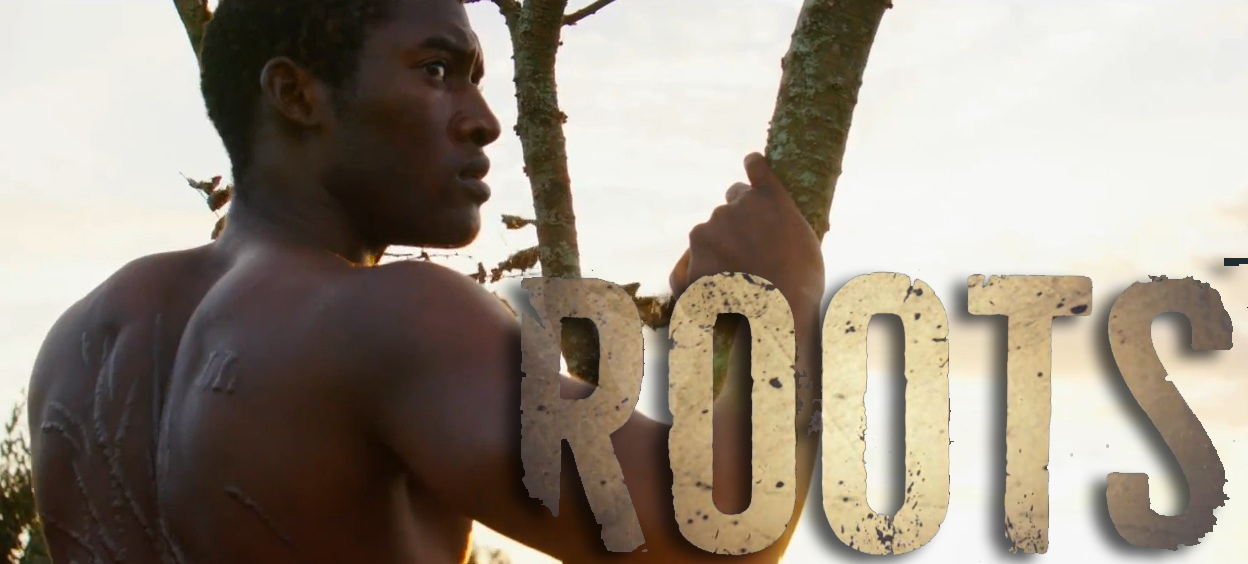
The 2016 miniseries distinguishes itself from the original in the efforts it makes to explore Mandinka culture and the life of Kunta Kinte (Malachi Kirby) prior to his enslavement. The first hour of the miniseries focuses on Kunta’s path through the Mandinka rights of manhood, his thoughts on leaving Juffureh to study at Timbuktu, and his desire to marry Jina, the woman he cares for – despite the resistance of his mother, father, and a rival of the Koros family who seeks to marry her himself. It’s this conflict between the Kintes and the Koros that leads to Kunta’s enslavement. In the 1977 series, Kunta Kinte’s life went unexplored, and he existed solely to serve as a vehicle for viewers to understanding the genocide and atrocities that comprised the triangle slave trade, not necessarily as a person with a life and a future that was stolen. The 2016 version of Kunta Kinte is not an avatar for the audience to understand slavery, he is a young man with dreams that will be deferred forever.
The original purpose of Roots was to the barbarity of slavery to audiences who may have refused to admit that it actually occurred. There can be no denial that Roots achieves its purpose. From the forced feeding of slaves, the beheading of the leaders of the revolt leaders on the slave ship, to the whipping of Kunta no attempt is made to avoid the inhumanity of what occurred. In his award-winning Between the World and Me, writer Ta-Nehisi Coats cautions his son: “The enslaved were not bricks in your road, and their lives were not chapters in your redemptive history. They were people turned to fuel for the American machine.” This first episode perfectly encapsulates this process, however I continue to have my misgivings about the continued need for stories of slavery.
All of the African diaspora knows the story of Roots. It’s our story of how we collectively find ourselves living in societies which appropriate our culture yet still, in the 21st century, deny our common humanity. It’s a history that’s shared by parents, grandparents, in barbershops, in classrooms at Historical Black Colleges and Universities (HBCU) and amongst people of African descent throughout the Western world. Roots is not a program intended for an Black audience. This series has always been and continues to be for a mainstream America that has yet to understand or embrace the descendants of American slaves, now living somewhat free lives in their midst. While mainstream America may continue to need this type of program, the diaspora does not.
While we have seen the story of Alex Haley’s Roots twice, we have never seen the Haitian Revolution depicted in film.[i] Nate Parker’s The Birth of A Nation, which tells the story of Nat Turner, is a necessary step forward and I hope it provides a bookend on these slave narrative films in order to make space for so many other stories that are worthy to be shown. The Birth of A Nation is scheduled for release in October of 2016.
Ultimately, Roots is a good show, with a talented cast, and great set design. However, I would have rather watched a story of a Mandinka son trying live up to the expectations of his family while pursuing his dreams of studying at Timbuktu. That would be a story that I’ve never seen before, but have a longing to see.
[i] Mike Duncan has done an amazing podcast on the topic. Check out the podcast Revolutions Episode 4.01-4.19.

 Pop Culture Uncovered
Reblogged this on The Adventures of Fort Gaskin-Burr.
LikeLike