
TV Review: Doctor Who
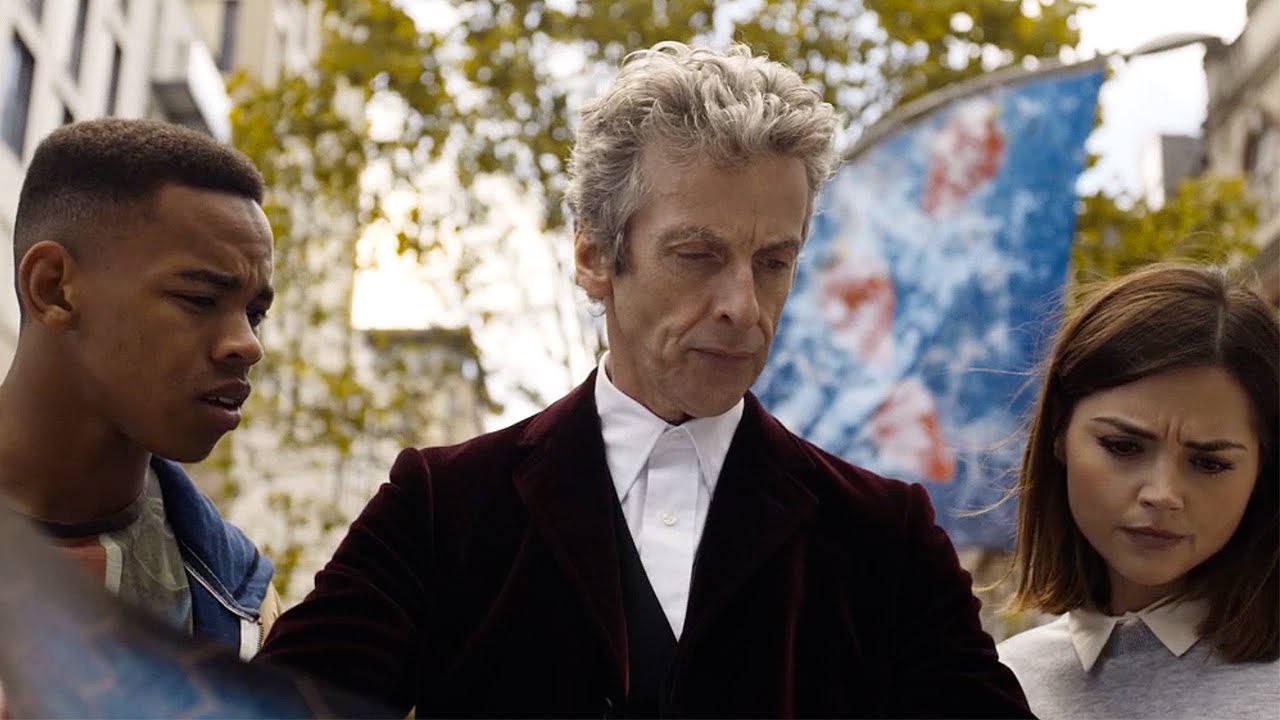
Face the Raven
As Doctor Who has reminded us time and again: there’s a cost to traveling in the Doctor and his TARDIS. Russell T. Davies contrasted the beauty of the travels in time and space, of the evolution of the Doctor’s companions, with the accusation that the Doctor fashioned his companions into weapons to do the things he refuses to do. As well as the fact he irrevocably alters lives beyond belief simply by contact with mere humans: for Rose that ended with her stuck on a parallel Earth, for Martha and Mickey it was finding a life together in UNIT after their conscious decision to define their lives outside of the Doctor, with Donna it was a metacrisis that led to the loss of all the new memories and identity she’d formed, for Captain Jack Harkness: it was the curse of immortality and rejection by the Doctor. Steven Moffat played with this in a different fashion with Amy and Rory. While Amy was essentially let down by the Doctor after he altered her life and then vanished from it within the space of a night, her life with Rory was played as a fairy tale: even with the loss of being able to raise their daughter Melody, they still had a close approximation of the life they could have had if the Doctor hadn’t made contact with them. Rory even got a chance to prove his love for Amy in the most idealistic way possible as the Last Centurion.
Clara however is a different character altogether. For that first season after Amy and Rory left, Clara was a bit of an abstract figure, more of a plot device than a character which even Moffat admitted to not so long ago. Series Eight changed this with the layers of definition she got, by way of having a normal life with Danny, and her being better defined as a controlling person. But as Series Eight hinted by way of Clara’s burning the candle at both ends, and Danny’s various accusations at the Doctor, he’s prone to not doing enough to counteract the effects of his actions upon people, and he also has the same tendency to fashion people into weapons unknowingly as Tennat’s Doctor did with his early influence upon Danny’s life. While Capaldi’s immediate predecessor: Matt Smith’s version of the Doctor could at worst be characterized as capricious: “The Man Who Lies” as it were, Capaldi’s Doctor has been more of a participant in the lives of the people he touches (or perhaps wrecks for some) the titular “Idiot in a Box”. However, as Series Nine was keen to remind us: Clara was becoming more like the Doctor. Whether that entailed being more compassionate, being more open-minded, or being danger-seeking, that last bit being the most worrying to the Doctor himself. And tonight that last aspect comes back to harm them both in the most horrifying way possible.
The episode features the return of Rigsy from last year’s “Flatline”, carrying a mysterious tattoo counting down to zero, and a dash of retcon preventing him from remembering the last twenty four hours. While that leads fairly quickly to the discovery of a secret alien refuge hiding in the midst of London, (shades of Harry Potter’s Diagon Alley there?) it’s mainly window dressing for the setup of Rigsy being accused of murder, and the person who’s sentenced him to death being a returning Ashildr, played once again by an always fantastic Maisie Williams. The nature of the death sentence that Ashildr places upon Rigsy for the fake murder he’s accused of plays into the climax of the episode, with Clara’s ultra-risk taker nature being ultimately her undoing when she takes the tattoo from Rigsy without knowing exactly how it works, or the possibility that the scenario was a trap. The episode’s finale: Clara dead, the Doctor teleported but basically promising revenge, while Ashildr finally considers just why the Doctor is called the “Oncoming Storm” is all a culmination of various running subplots that laid beneath the surface.
Clara’s thrill seeking nature has been referenced time and again, but her unwillingness to heed the consequences is a catastrophe under the wrong circumstances as tonight shows us. I’ve had issues with Clara for a long time, mainly because Jenna Coleman is a more nuanced actor than the show allowed her to be. However, this last season Coleman has gotten more to use: Bonnie in “The Zygon Invasion/The Zygon Inversion, and in this episode the culmination of her built up persona hits its climax. The Doctor himself isn’t necessarily sidelined in this episode, but it’s not quite his story which works to the story’s power. As Sarah Dollard’s script shows: Clara’s actions are simply are the kind of brinksmanship the Doctor would employ, her only mistake was not being “less breakable” like the Doctor. While the Moffat run has had companions die before (sometimes to the point of it being a joke like with Rory), the tension and finality here is earned. The same goes for Ashildr as well. Her actions are simply in line with what she learned from watching the Doctor, his first actions with the immortality he cursed her with being to run away: not unlike Captain Jack Harkness. Her mistrust of his sincerity towards his companions and even Earth aren’t entirely unfounded, and her willingness to lay down her dignity for her little slice of London, is simply the sort of thing one would learn attempting to act out what the Doctor would do in reverse, and Masie Williams plays those sad attempts at doing right to the hilt in this appearance, as well as she did her last.
That being said: Capaldi may be a tad sidelined, but he isn’t out. His Doctor got precious few moments in the last series bar a few episodes, and same for the early going of Series 9. But between “The Zygon Inversion” monologue about the stupidity of war, and this episode’s ending promise of revenge: Peter Capaldi is well on his way to crafting a memorable character. That being said, the directorial choices by Justin Molotnikov go a long way towards what’s been one of the most memorable episodes in a string of them. While Doctor Who’s budget looks a tad sparse in the execution nowadays, that’s fine because where it counts the big execution is handled fantastically. From the haunting shots of the Raven, to the focused conversations between Clara and Rigsy, from the leap of haunted horror to restrained fury on Capaldi’s face. While Sarah Dollard’s script comes in at the tail end of what’s been a better season for Doctor Who, it really pushes its case for perhaps one of the best in Moffat’s run. The story from start to finish is about relationships forged between all the major players involved: not byzantine time travel plots, not retconned plots (except for the drug), but of the harm we invoke upon people simply by action or lack thereof. It’s a tragedy, but one that earns its keep in our hearts.
5 out of 5 Ravens
P.S:
– There’s still that last medical patch the Doctor bequeathed to Ashildr, death isn’t exactly the end on Doctor Who, this was also a plot point that was buried in plain sight.
– It’s always nice to see Capaldi’s Doctor encounter babies. He’s not immune to their charms, even if he refers to them as “little humans.”
See you all next week for the start of the final two-parter: Heaven Sent. I’ll be waiting with bated breath like all you pudding people.

 Pop Culture Uncovered
The other medical patch bequeathed to Lady Me was used on that highwayman in ‘The Woman Who Lived’.
LikeLike
That was something the Doctor suggested. It was never shown to have happened.
LikeLike